Dominion Review, An Ode to Rice and Beans
In the world of videogames there exists a metric used to rate the value proposition of the purchase of any one game: game per dollar. The idea is simple, estimate the time you will spend playing the game, then divide that by its price. As a teenager with limited income, I bought my copy of Slay the Spire (the board game adaptation of which is an upcoming review) for about 16 USD. Doing the math on my 431 hours of playtime shows that each dollar spent bought me about 27 hours worth of entertainment. Compare that to say, a night at the movies, where each dollar buys me a little less than 10 minutes of entertainment, and the difference is obvious.
This metric is crude, of course. The two hours I spent in theaters watching Sinners was worth way more to me than the equivalent two hours I spent playing Slay the Spire. GPD leaves out a lot, but we live in a world with limited budgets for our hobbies and it sucks to spend lots of money on something that starts getting old after only a few hours. Plus, hobby industries are chock full of salesmen who want to convince you that the forty euro burger with gold leaf is an experience that will change your life. GPD helps me push back on that. It helps me remember that some of the best meals I’ve ever eaten were 2.40€ worth of rice and beans with a well chosen palate of spices. That’s my pitch for Dominion, the rice and beans of boardgames. It’s cheap, it’ll satisfy you, and it’s so endlessly customizable that you’ll struggle to run out of variety.
Released in 2008, Dominion is the grandfather of the popular deckbuilding genre that has flooded boardgames and videogames alike. The premise is simple, you start with a deck of (rather weak) cards. You draw a hand of five from the deck, and those cards give you gold to buy cards with strange and unique effects from a center tableau. Whatever you purchase ends up in your discard pile, and when you shuffle that pile into your deck, you’ll have access to that new card. It’s a snowball effect; good cards let you generate more gold which lets you buy even better cards. When the game ends, a winner is decided by counting up the value of victory point cards in each player's deck. These cards (typically) give you no benefit in your turn and constitute a dead draw, so the victor’s deck is the one that can best acquire these cards while mitigating their downsides.
Dominion is dead simple to teach, with some exceptions. While the mechanics of Dominion can be explained in less than five minutes, actually getting someone to the point where they feel they can make fun strategic decisions can take some time. For one thing (and I'll get into this more later), there are so many different cards available for purchase in the tableau that it can be overwhelming. I’ve seen many new players confidently understand the core rules, then stare at the tableau in a daze before asking me: “So what do I buy?”. It’s not helpful that effective strategy in deckbuilders is somewhat unintuitive to those who have no experience with the genre. A common mistake for new players is overbuying large quantities of cards and undervaluing card removal. It can take time to intuitively understand that what defines a deck is not the raw quantity of strong cards, but rather the proportion of strong cards to weak cards. In the end though, I can’t really see this as a downside, it’s just the reality that trying new things takes effort. At the risk of mixing food metaphors, It’s worth learning to use chopsticks if it means you get to eat sushi.
Despite its propensity to overwhelm newbies, Dominion’s tableau is definitely its strongest asset. Each game sees you selecting (at random or your choice) ten stacks of cards from the box, plus a few basic cards available in every game. Players need to identify which cards from the selection work well together and devise a strategy for the long term. For instance, I may see a lot of cards that give me extra cards and actions, and determine that the best option would be to invest in a few large pieces of gold, and have the rest of the deck consist of cards that chain extra cards and actions together to draw me said gold. The process of having to call your shot on a new tableau, then react to unlucky draws and disruption from your opponents is a consistently lovely test of strategic thinking and adaptation.
Look, the game is great. I love it, and I recommend it, but I don’t feel like anything I’ve written has communicated why this game remains unique and meaningful even after other developers have iterated on the deckbuilding formula for almost two decades. To explain what I mean, I need to take a small detour.
In strategy games, there is often a tradeoff between the accessibility of an experience and its depth. By accessibility here I mean the amount of time and effort required for a player to start making rewarding strategic decisions. Depth, conversely, is the amount of time and effort a player can invest before the game stops rewarding them with new and interesting strategic decisions (i.e. when the game becomes ‘solved’). Personally, I find Chess impenetrable. I’ve played a lot of it and I’ve read some beginner strategy, but I never feel like I know what I’m doing. I end moves in Chess thinking: “Sure, I guess that move won’t kill me instantly, whatever”. I never feel like I’m advancing a plan of attack, I feel like I’m ambling forward aimlessly. Chess is a game with low accessibility but a high depth. It’s a game you can study for years, but it's also a game you need to study to make any real progress. Ticket to Ride, on the other hand, is eminently accessible in its strategy. From the moment I read the rules and drew my hand of routes I was off planning efficient rail connections across the American West. It’s also, unfortunately, low in depth. By my fifth play, I’d seen all it really had to offer and was bored. The developers of Ticket to Ride are aware of this tendency, if their smorgasbord of expansions with new maps and mechanics is any indication.
This is a core tragedy of the board game hobby. We crave both depth and accessibility. We want to be continually exposed to novel ideas and strategic challenges from our game, but the games that offer this most are often impenetrable slabs of marble we need to somehow convince four people to chisel away at for months. So we flit around, and our shelves accumulate collections of 80€ purchases that all advertise themselves as “easy to learn, hard to master” and we never play them more than twice. We know we’d have more satisfaction and weightier wallets if we just stuck with something and really got to know it, but there’s always that voice in our ears wondering: “Would I be having more fun with that game I didn’t choose?”. And then we buy both and play neither.
What makes Dominion special is how it spears straight through this dilemma. Each time a new tableau is selected from the box, a new game is created. Even if each player has played with each card in the tableau before, the nature of probability means that no player has seen these cards in this combination. No card on its own can create an optimal strategy, so a victory-defining card in the last game could be trash in the next. Making a good deck requires a player to approach each tableau as its own distinct environment. Dominion overcomes the accessibility/depth tradeoff by dispersing its depth over a series of bite-sized experiences. No individual tableau has the endless depth of Chess, but that just means that you can make meaningful strategic progress towards solving a tableau in an afternoon instead of a lifetime. You can replay a tableau as many times as you like until it bores you, then just randomize a new one from the box. Even if you somehow play Dominion enough for it to become stale, it has a genius modular expansion system that completely neutralizes the problem. Each expansion is fully compatible with every other, and you can randomize a tableau from your entire collection. The math of combinations means that each added Dominion expansion exponentially increases the amount of time required for things to get stale.
Dominion is the rice and beans of board games. It’s delicious, endlessly customizable, and cheap. The game per dollar of the base game is in the top 5% of board games, and the metric gets exponentially better as you add expansions. It is an antidote to unsustainable hobby spending, somehow managing to offer accessibility and depth while sacrificing neither. I literally don’t believe it's possible to run out of novel Dominion experiences in a human lifetime. It is the grandfather of deckbuilders, a titan of the genre that has yet to be ousted. (Slay the Spire is the only real Zeus in contention, but that’s a videogame so it doesn’t count, plus Dominion trounces its board game adaptation)
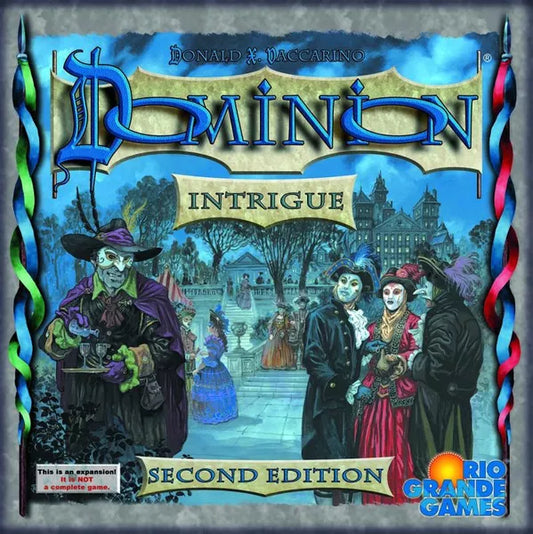
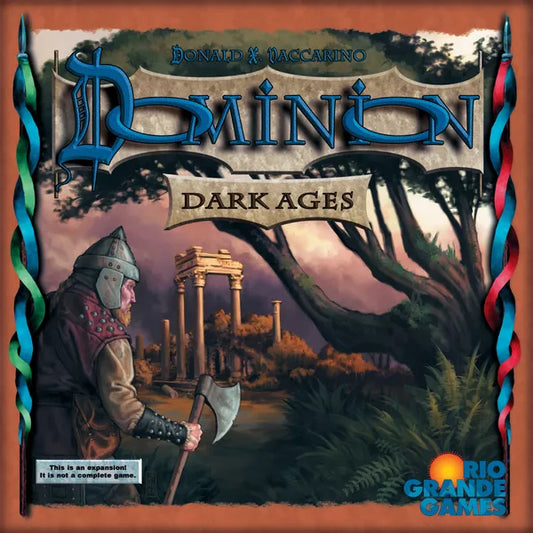
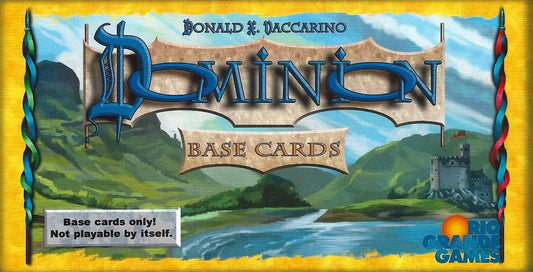
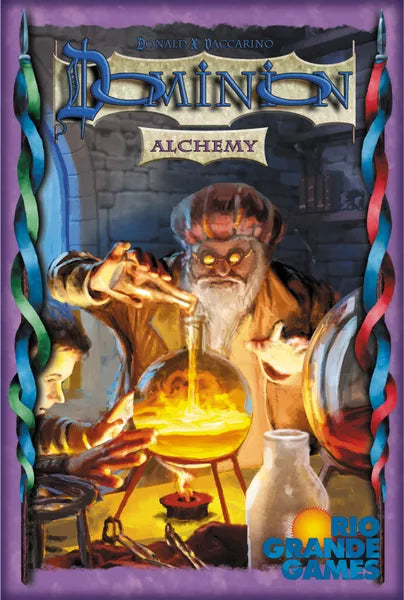
I recommend you give it a shot. You can start with the base game, or pick up any of the expansions plus the base card set and you’ll be good to go. Thanks for reading.